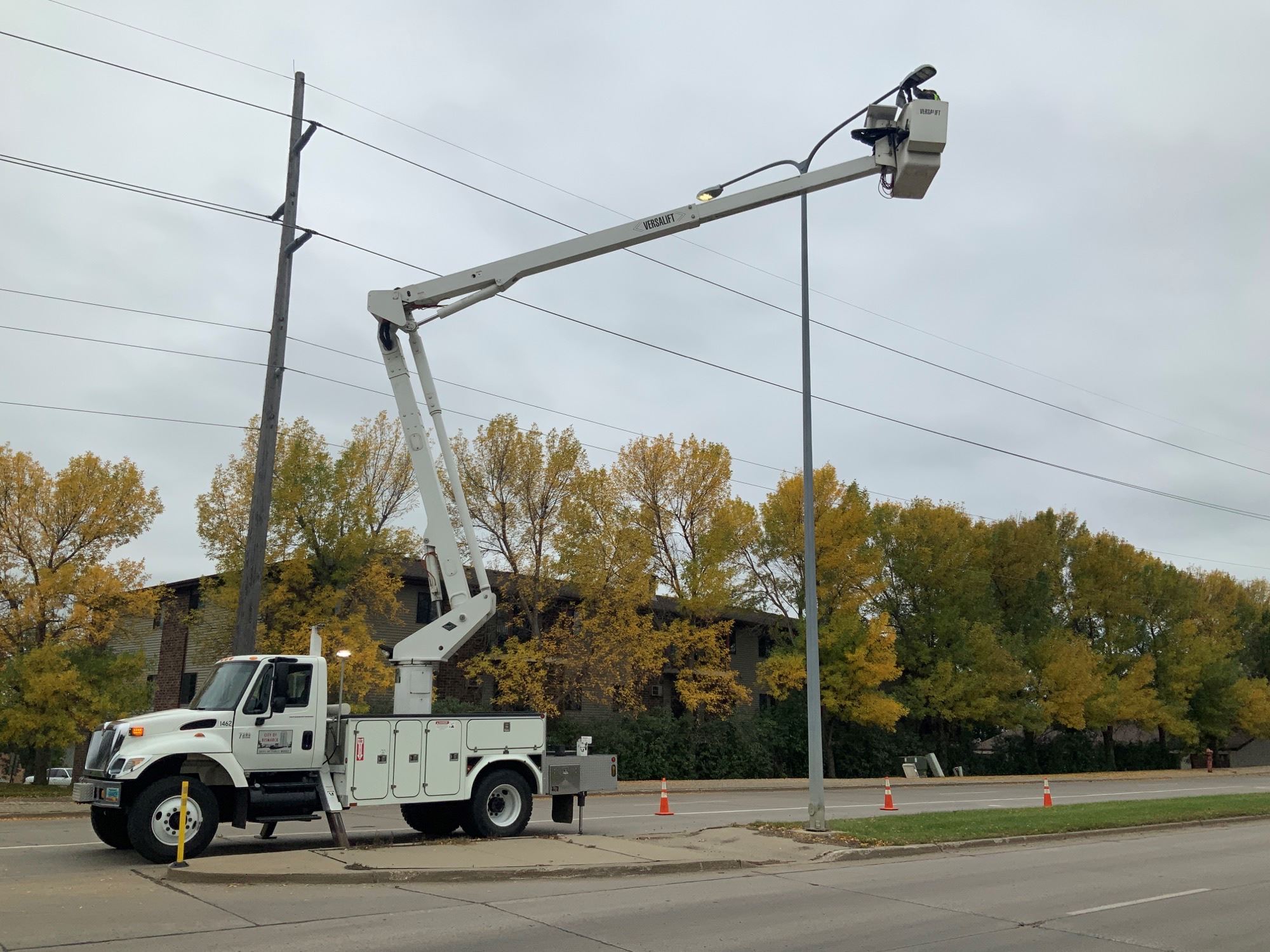
 With nearly 10,000 streetlights maintained by the City of Bismarck, Public Works Service Operations staff realize their time hinges on money and safety.
Many of the staff in the Street Light and Traffic Signal Division are in the process of changing about 1,000 streetlights from High Pressure Sodium (HPS) lights to more efficient Light Emitting Diode (LED) counterparts. As the calendar flipped to October about 700 lights had been converted in 2023, with about 300 to go for the year, regardless of if the weather wants to cooperate or not.
To fully understand why this change to LED lights is being made, Street Light/Traffic Signal Division Superintendent Paul Lies says there are different ways the City of Bismarck is creating savings through the project that started in 2013.
Presently, LED lights are priced between $300-$400 per fixture and are more expensive than the HPS versions that have been used in years past. Until recently, HPS fixtures had cost about $100 per unit before prices rapidly doubled.
“But, it isn’t just the cost of the HPS fixture,” said Lies. “The light-producing bulb in an HPS fixture has tripled in price and parts are becoming scarce. There is no longer a guaranteed supply of bulbs.”
Part of this scarcity can also be tied to the bulb’s diminishing quality. Years ago, these bulbs could reliably be expected to last five years and many would provide light for up to a decade. However, now the life expectancy of the bulbs is at about 24 months. In contrast, LED lights presently come with a 10-year warranty and estimates are looking at these devices providing light for 25 to 30 years.
This expected extended LED life means city staff will spend less of their time replacing the equipment, said Lies. Along with the cost savings of needing to perform less maintenance, less time spent replacing equipment is also safer for staff and the public. Fewer roads will need to be shut down, fewer areas will be coned off and fewer staff will be working next to moving traffic.
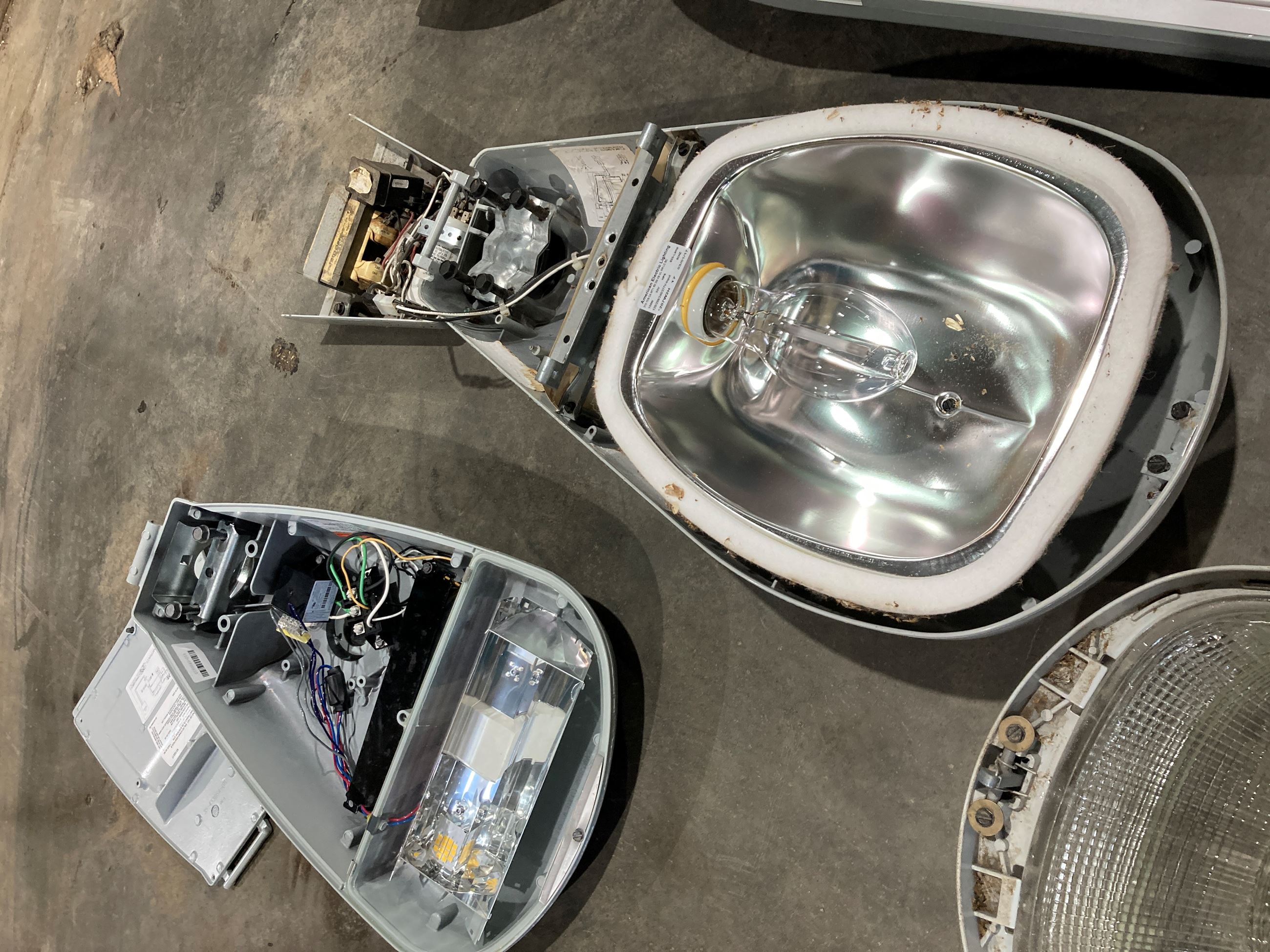 Troubleshooting an LED housing is significantly easier for staff. If an LED system fails, there is one component to test. If that component fails, the entire housing can be replaced. With HPS lights, there are about a half-dozen components to troubleshoot, which means determining the problem with a light takes significantly longer with the older models.
LED lights are also more efficient than HPS lights, said Lies. This is because the LED lights use about 60 percent less electricity to operate. Lies said his staff first began measuring the electricity draw when installation began in 2013. After a handful of years, the results continued to consistently come back between 50-60 percent more efficient.
Lies also says he prefers the LED light versus the HPS counterpart. “It is a more natural light,” he said. “The color is more normal. If you have people on curbs, you are better able to see them. If something nefarious is happening, you can give a better description of what is happening and if you need to describe the color of a vehicle or of someone’s clothing, you aren’t fighting that orange or amber tint to everything.”
When fixtures do reach the end of a useful life, they will be recycled. While many of the lights they are presently replacing can be recycled, this is a relatively new process. As recently as 15 to 20 years ago, the old capacitors contained traces of Polychlorinated Biphenyl that could potentially pose a health hazard.